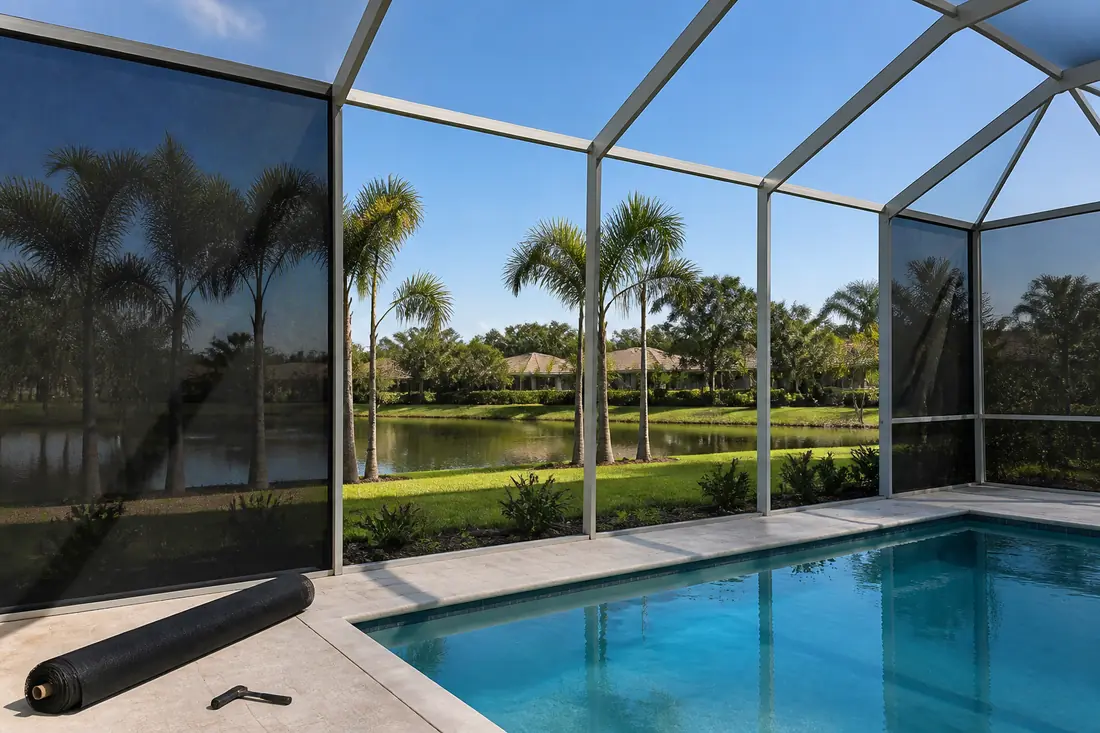
Pool Cage Rescreening
Full or partial rescreening of pool enclosures where the mesh has gone brittle, stretched or torn out.
Free estimateDetails
Pool cage rescreening, lanai screen repair and enclosure rebuilds for Naples, Marco Island and Collier County.
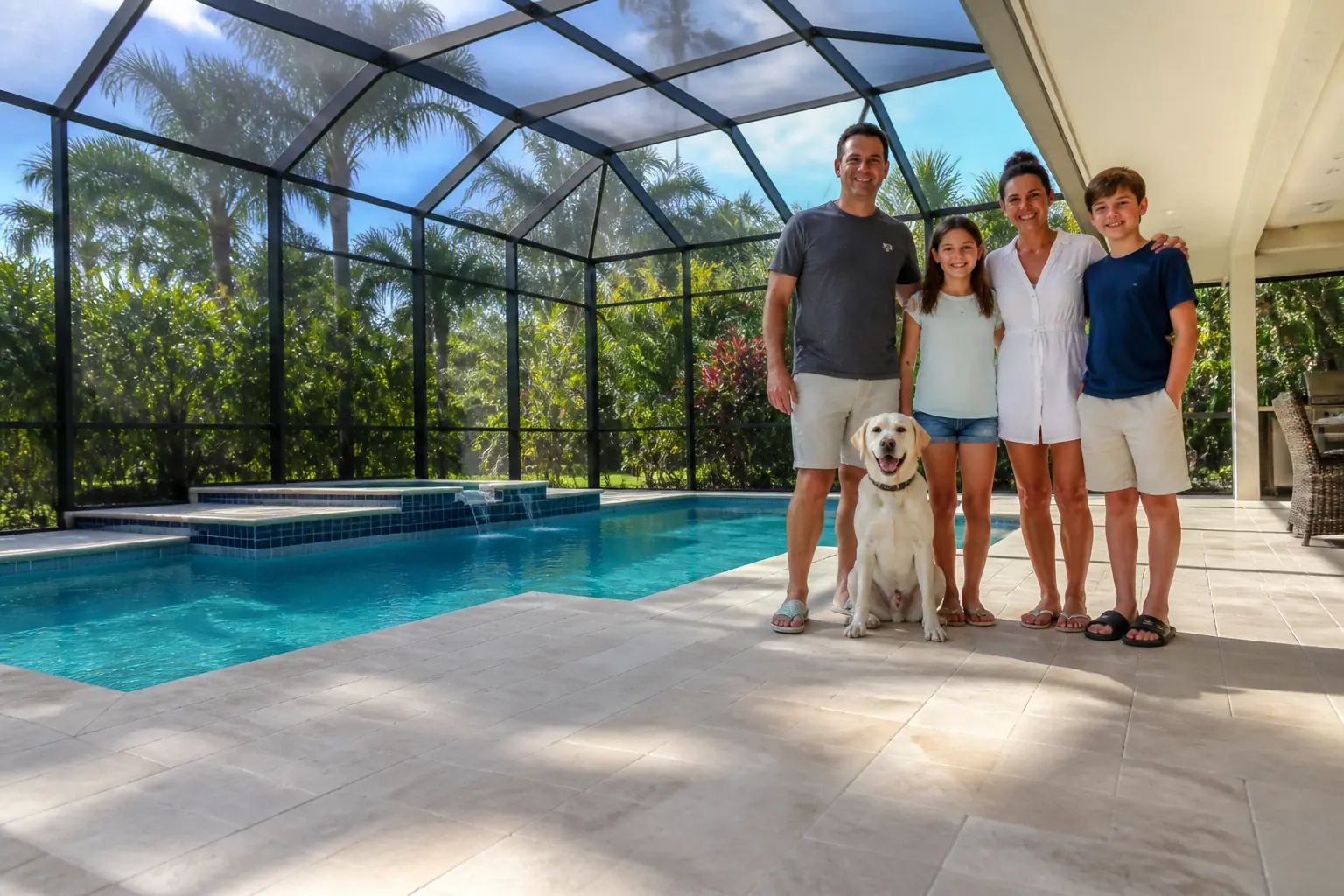
Pool cage rescreening, lanai screen repair and enclosure rebuilds for Naples, Marco Island and Collier County.
Mon–Fri 7:00am – 5:00pm · Sat 8:00am – 1:00pm · Sun Closed
Straight through to a person, not a phone tree.
Tell us what is going on and we will get back to you with the next step.
The fasteners get checked, not just the screen
Salt air works on the screws and clips holding a cage together faster than it works on the frame. A cage that keeps tearing in the same bay is often telling you about its hardware rather than its screen.
Panel repair and full rescreen priced separately
A handful of torn bays is a different job from a cage whose screen has reached the end of its life across the whole structure. Both get quoted where both apply, rather than defaulting to the larger one.
Mesh chosen for what it has to keep out
No-see-um mesh, pet-resistant mesh and standard fiberglass behave differently on airflow, visibility and lifespan. Which one suits depends on the site and how the space gets used.
Storm season built into the schedule
Florida's code allows enclosures to be designed so screen releases under load, which is why a cage can lose panels and stay standing — though the frame is still checked against code wind pressures with every panel in place. Getting a damaged enclosure closed up matters more than getting it perfect, and the sequence reflects that.
Pool cage rescreening, lanai screen repair and enclosure rebuilds for Naples, Marco Island and Collier County.
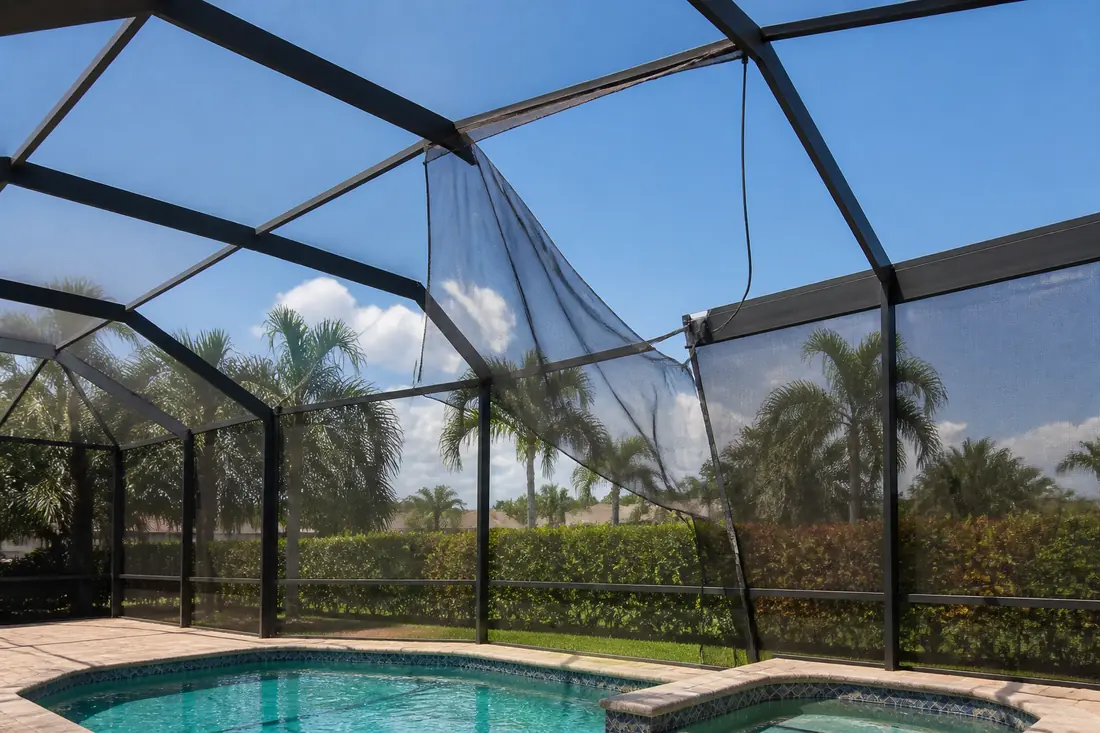
Screen has a service life. Sun, salt air and heat make it brittle long before it looks worn out, and the sign is usually that a panel tears at the spline when it is touched rather than that anyone can see the damage. Once one bay has gone that way, the neighboring bays are generally the same age and the same condition.
Rescreening runs from replacing a few bays to redoing an entire cage. Which makes sense depends less on how many panels are currently torn than on how the untouched ones behave when they are tested, because a cage rescreened one bay at a time over three visits costs more than doing it once.
Most pool cage repair is small work that gets postponed until it is not. A torn bay lets insects in; a corroded fastener lets a whole panel go in the next storm; a door that has dropped on its hinges racks the frame it hangs in. Each is inexpensive on its own and each compounds if left.
Repair covers the screen, the aluminum and the hardware holding both together, and on a cage in Southwest Florida the hardware is usually the part with the shortest remaining life. Salt air reaches screws and clips well before it reaches the extrusions.
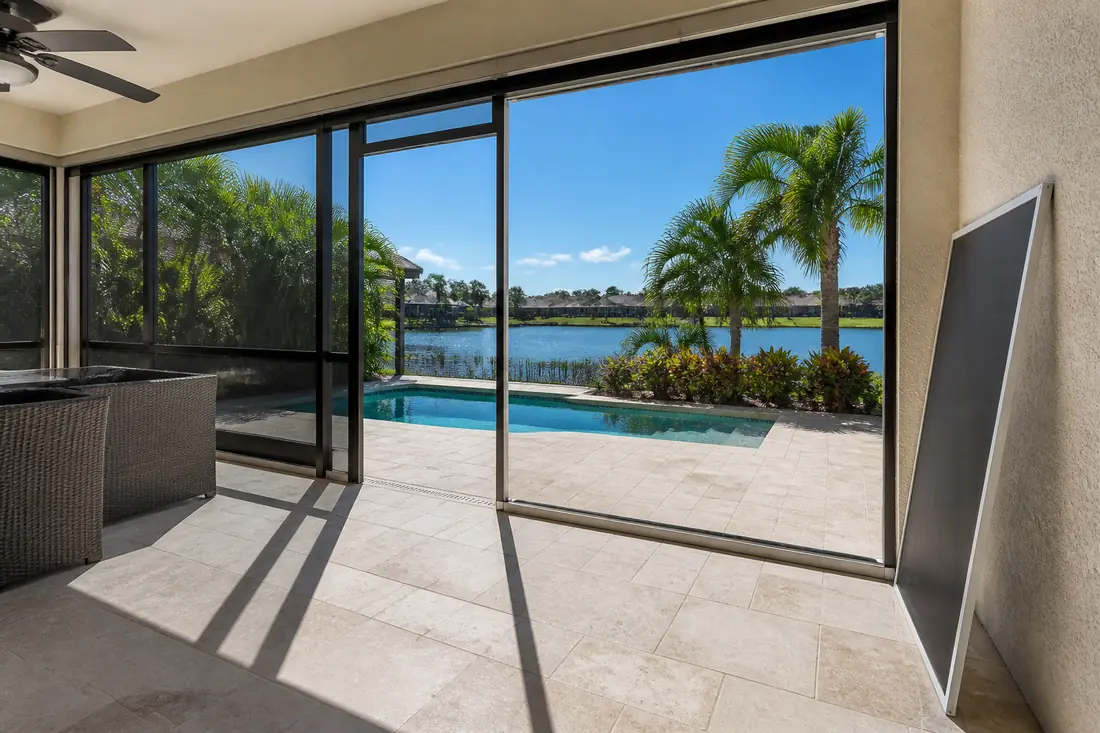
A lanai differs from a pool cage in that the roof is part of the house rather than part of the screen structure. That changes what fails and how: the screen sits in framed openings, often between masonry columns, and the failures cluster around the frames, the sill track and the door rather than across a roof.
It also changes the repair. Where a pool cage is one aluminum structure, a lanai screen enclosure ties into the house, so water management at that junction matters as much as the mesh does.
A cage gets rebuilt when repairing it means fixing sound work to a structure that is no longer square or no longer adequately anchored. Cages built to older standards, cages that have been repaired repeatedly at the same connections, and cages deformed in a storm all fall into that group.
A rebuild is also the opportunity to correct what the original never had — anchor spacing, bracing, beam sizing and a footprint that suits how the space is actually used rather than how it was drawn.
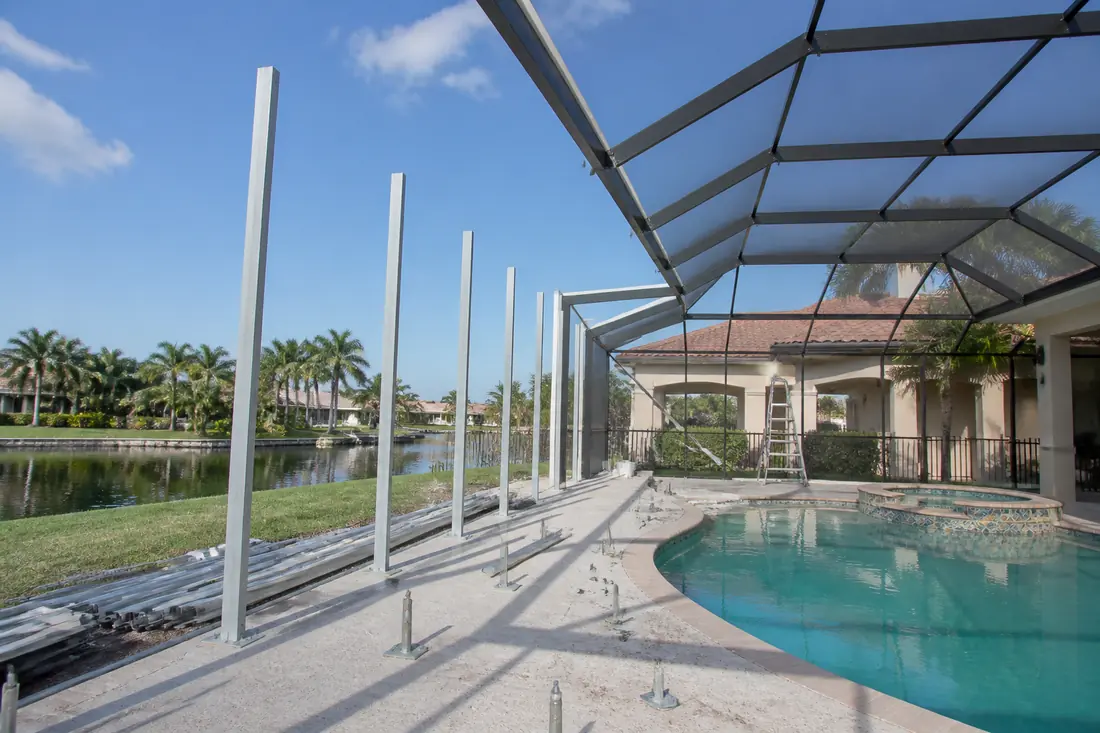
Full or partial rescreening of pool enclosures where the mesh has gone brittle, stretched or torn out.
Full or partial rescreening of pool enclosures where the mesh has gone brittle, stretched or torn out.
Torn panels, bent framing, failed fasteners and doors that no longer close, repaired on cages that are otherwise sound.
Screen repair and replacement on lanais and covered porches, where the roof is solid and the screen fills the openings.
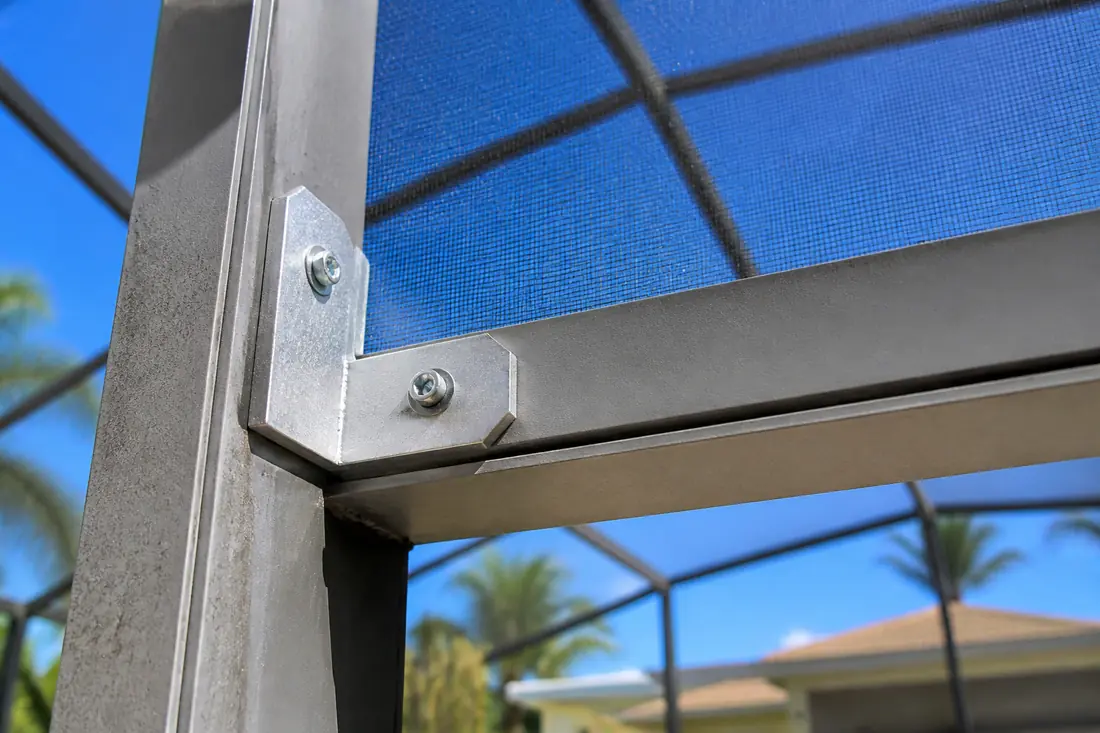
Replacing the corroded screws, clips, brackets and anchors that hold an enclosure together in salt air.
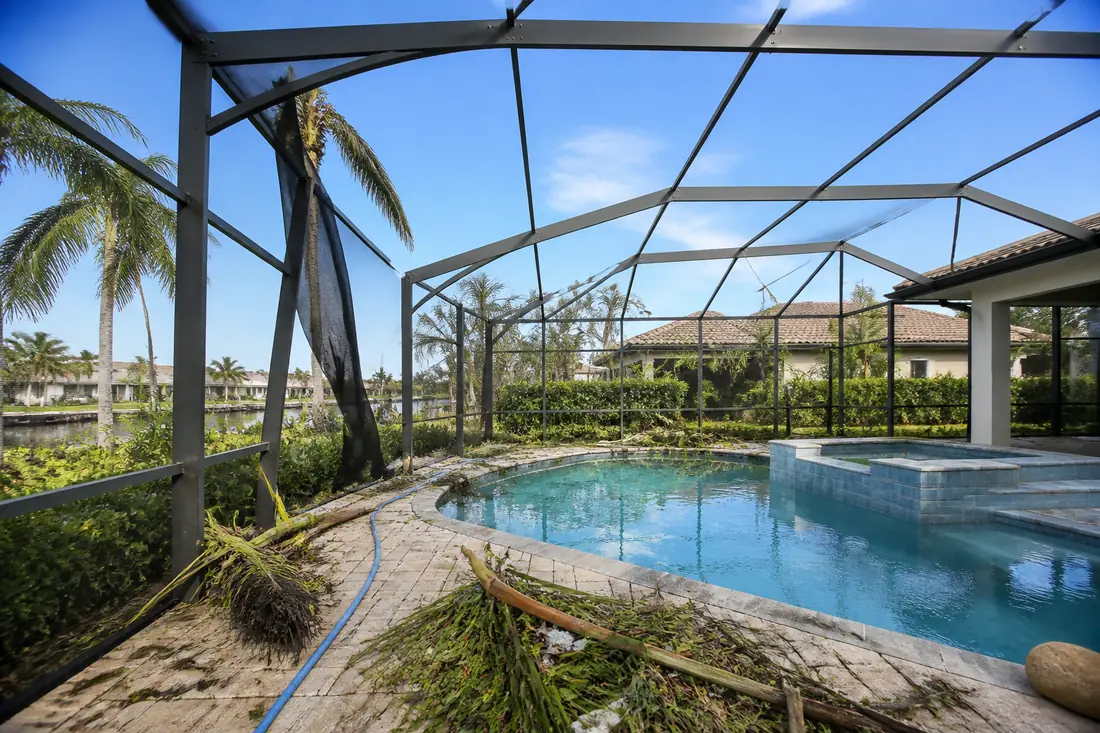
Assessment and repair after wind and debris damage, including documentation suitable for a claim.
Full replacement of an enclosure whose frame has reached the end of its life or been damaged beyond economic repair.
Full replacement of an enclosure whose frame has reached the end of its life or been damaged beyond economic repair.
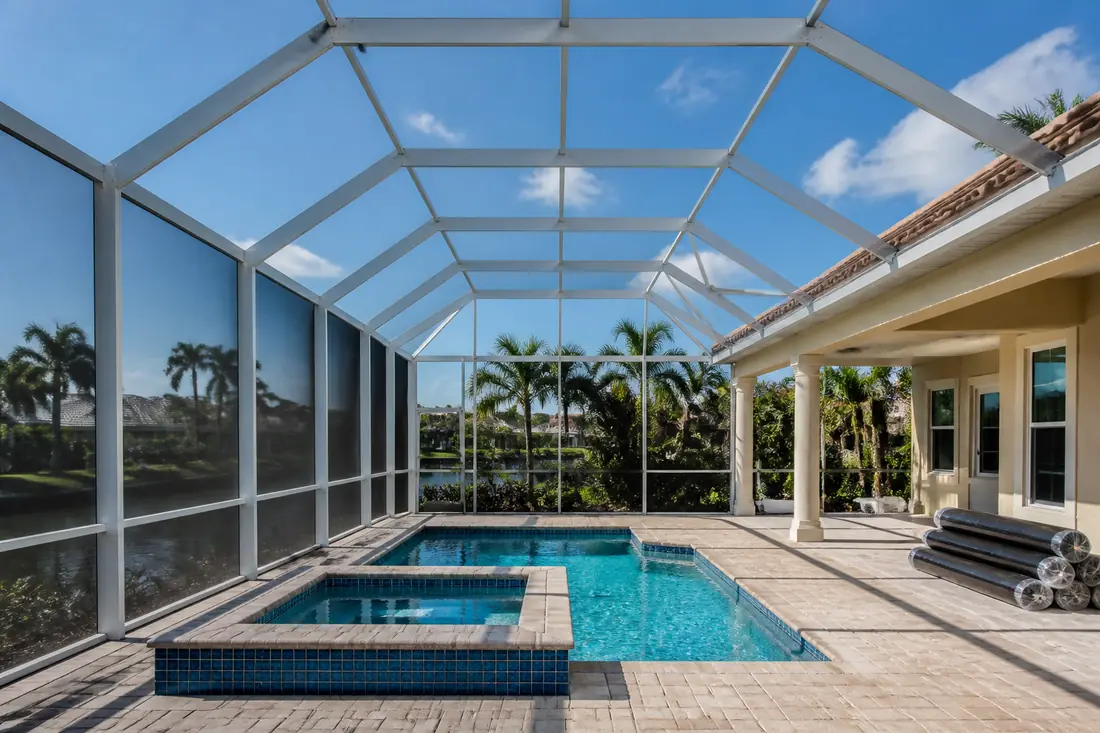
New pool cages, screen rooms and enclosures where none exists, engineered and permitted for the site.
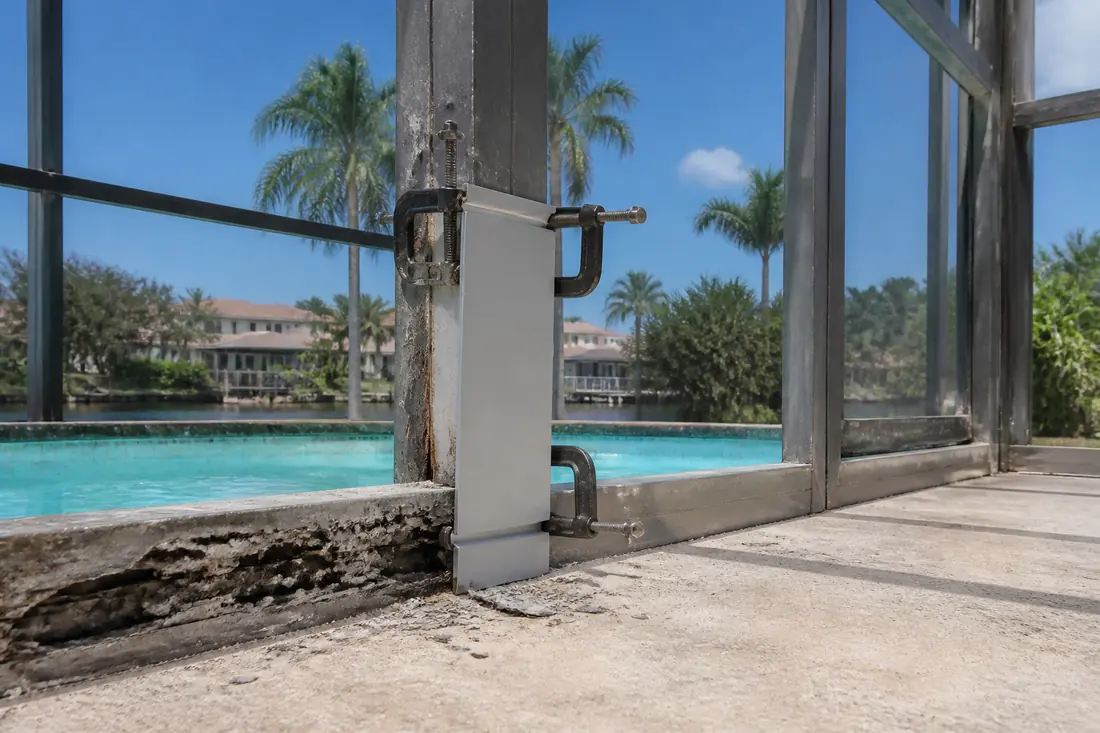
Straightening, splicing and replacing bent or corroded aluminum members on an otherwise sound enclosure.
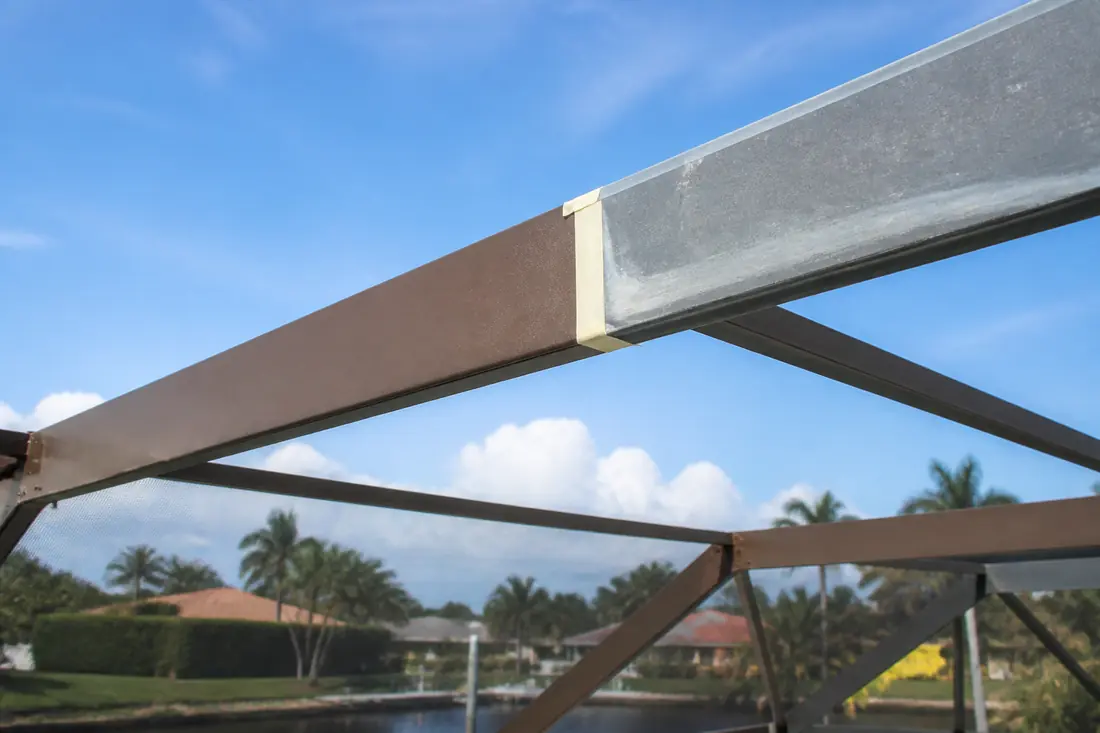
Refinishing chalked, faded or oxidised aluminum framing on a structure that is sound.
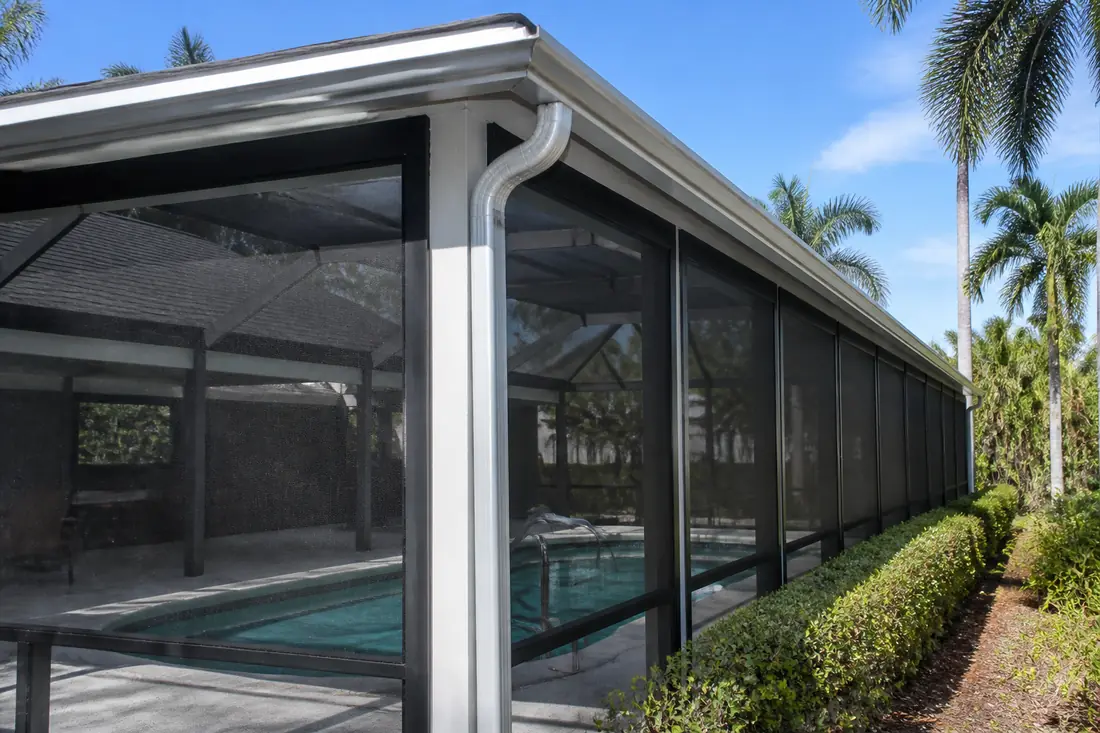
Gutter, downspout and drainage work on the enclosure roof line, where water is sent away from the deck.
Tighter-weave mesh for properties where standard screen does not keep the smallest insects out.
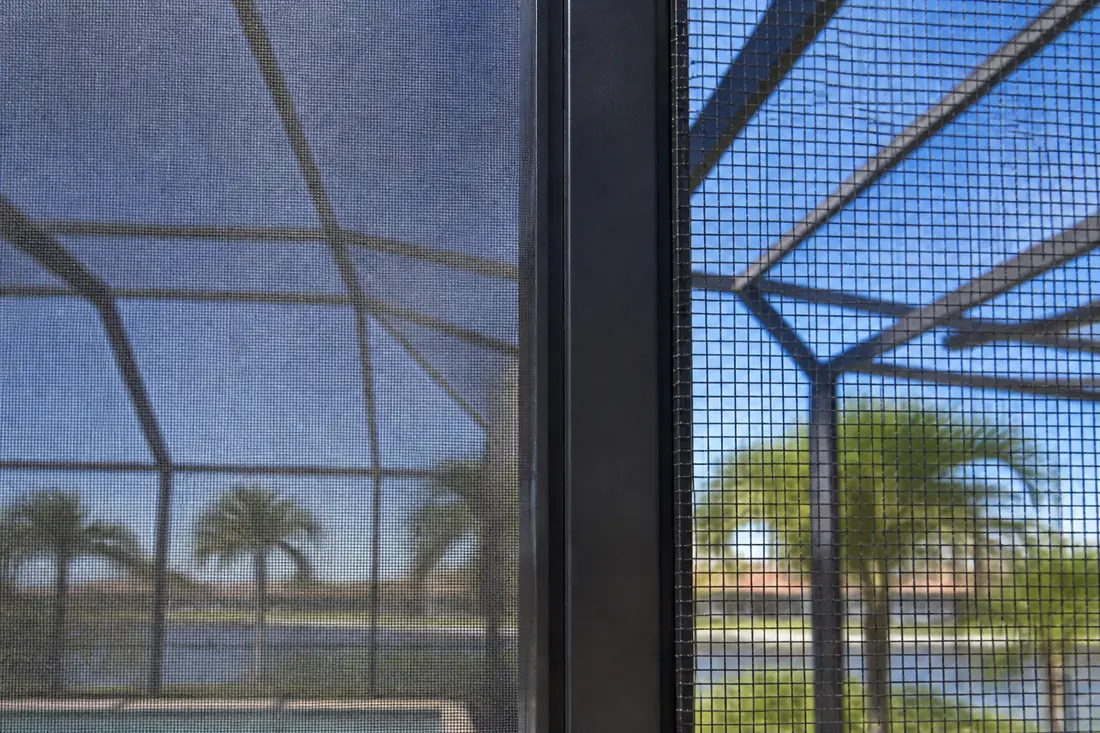
Tighter-weave mesh for properties where standard screen does not keep the smallest insects out.
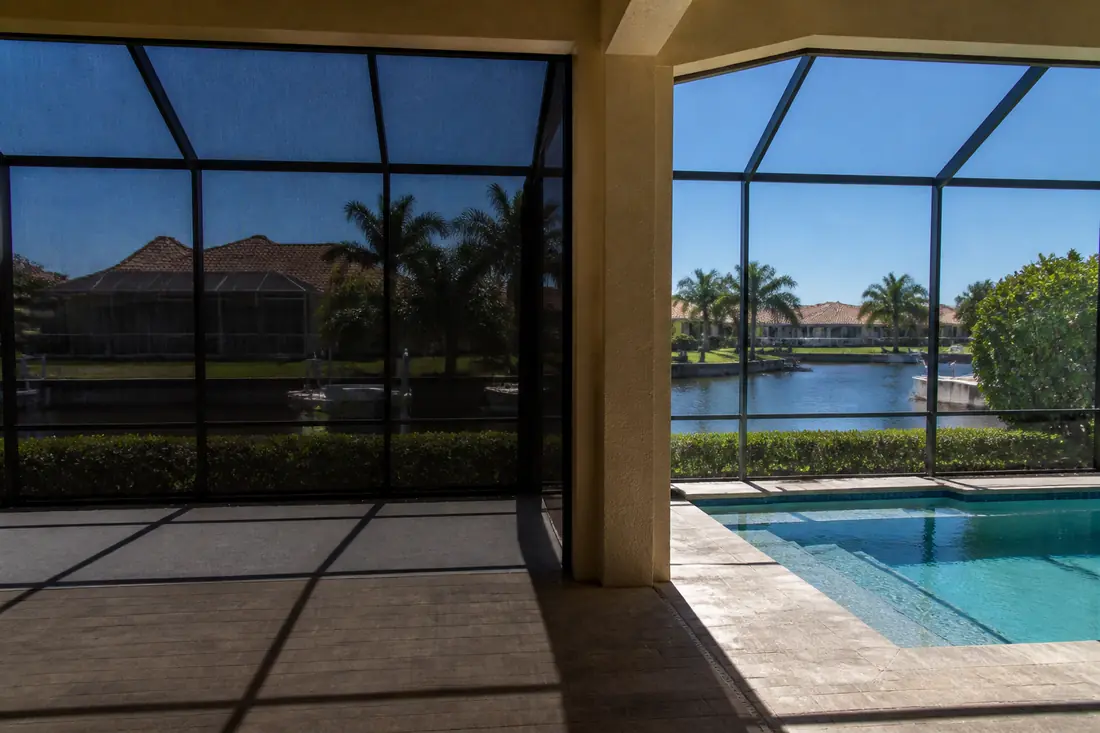
Denser mesh panels that cut heat, glare or sightlines on specific elevations of an enclosure.
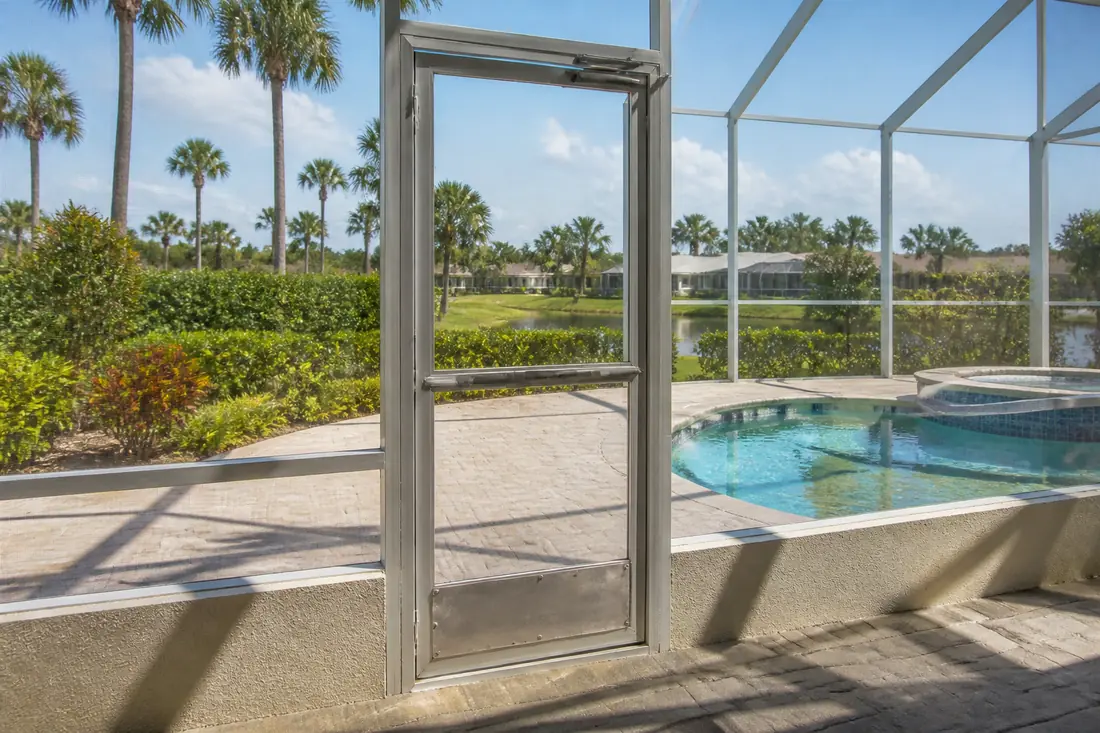
Replacing and adjusting the sliding and hinged screen doors that fail long before the rest of an enclosure.
Rescreening and enclosure repair for condominium associations, rental portfolios and community amenity decks.
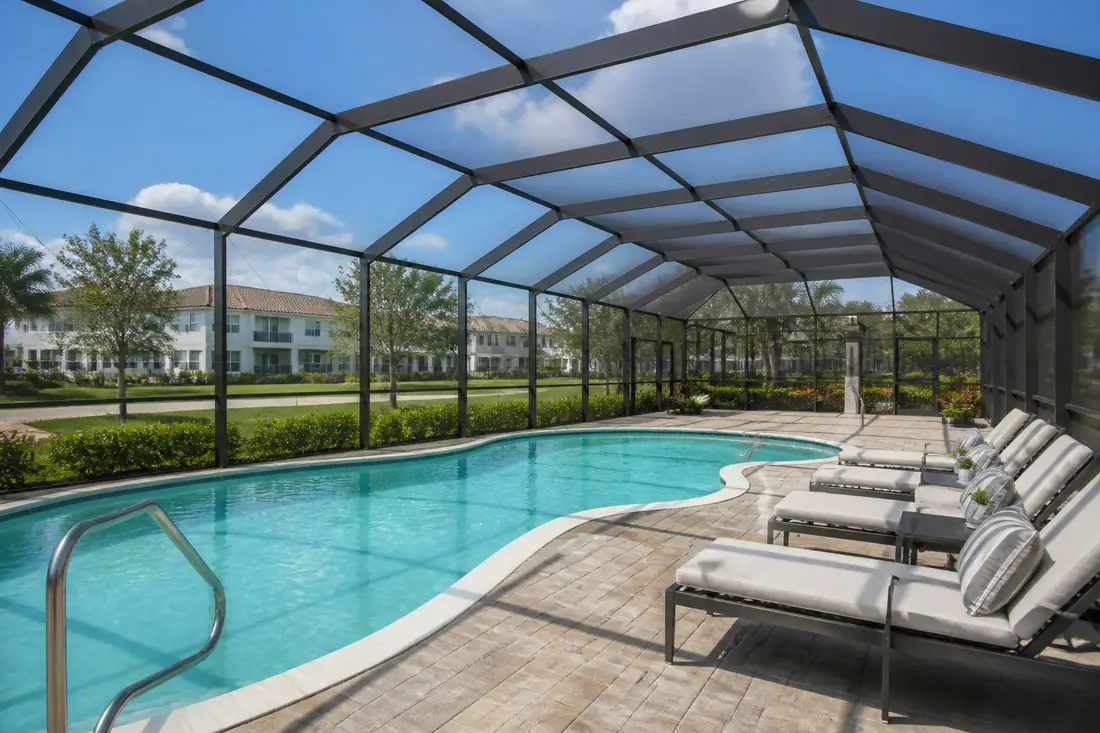
Rescreening and enclosure repair for condominium associations, rental portfolios and community amenity decks.
Every service we offer, and what the work actually looks like.
Your request is read and sorted by urgency rather than dropping into a queue. Marking the job urgent on the form changes how quickly it gets looked at.
Work of this kind is assessed in person rather than quoted from a phone description, so the scope and the price are both settled before anything starts.
You see the options and the cost before any work starts, and a cheaper repair that genuinely solves the problem should be presented alongside the bigger one.
Removed material is hauled away and the site left clean. Cleanup belongs in the job rather than being an extra you have to ask for.
If any of this looks like your property, it is worth getting eyes on it before the next wet season.
Brittle mesh at the end of its service life, usually across a whole elevation of the same age rather than in one bay. The test is physical: press an intact panel and see whether it gives.
Rarely bad luck. A corroded fastener, a racked frame member or missing bracing concentrates load in that bay, and each new panel meets the same conditions the last one did.
Aluminum holds up in salt air and the steel fasteners holding it together do not. An enclosure can look sound while the connections have lost a meaningful part of their strength.
Dropped hinges or a tired closer. Cheap to correct early, and worth doing before the door works its frame out of line and turns an adjustment into a replacement.
Standard mesh does not exclude them. This is the most common reason to rescreen before the existing screen has actually failed, and it often only needs doing on the water-facing side.
A separated, blocked or fallen gutter line sending water to the base of the structure, where it works on the anchors that hold the enclosure down.
The mesh decides what gets kept out, how much air moves through, and how often the panels need cleaning. Here is how the common types compare and what each is generally suited to.
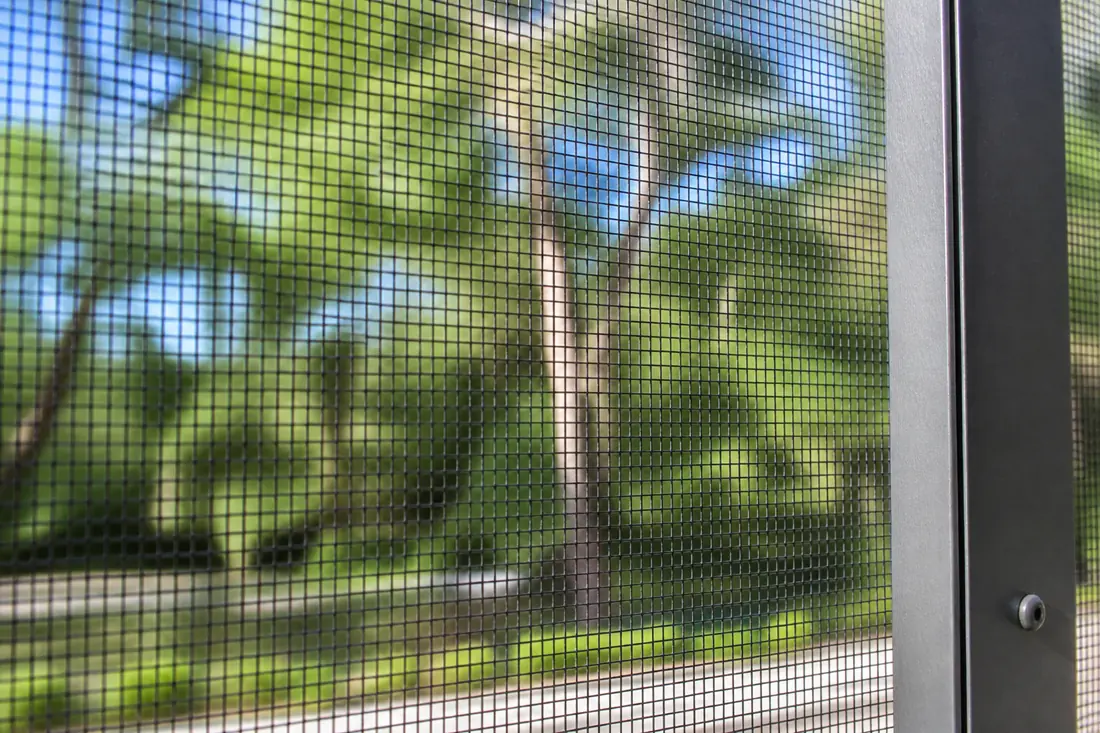
The default, and the right answer more often than people expect. It moves air well, is the least expensive to replace, and keeps out mosquitoes and larger insects. What it does not stop are no-see-ums, which is the main reason properties near water upgrade from it.
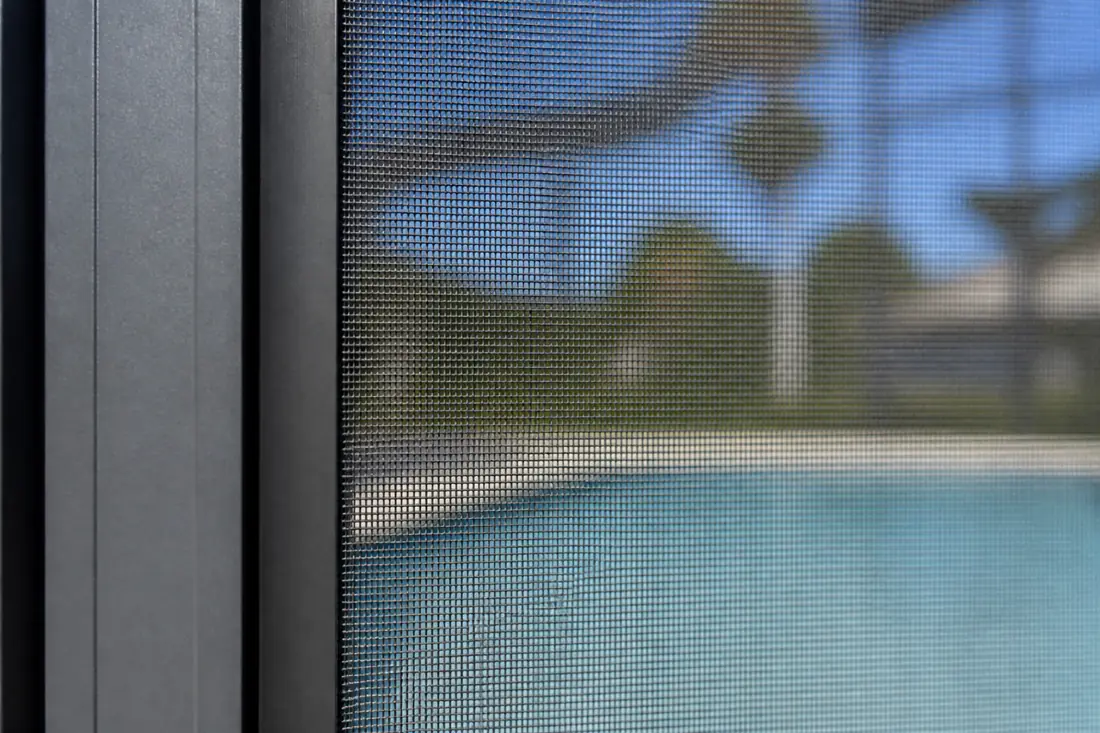
A tighter weave that excludes biting midges standard screen passes straight through. The trade is real: less airflow, slightly reduced visibility, and more dust and salt held in the weave, so it needs cleaning more often. Frequently worth applying to the water-facing elevations only.
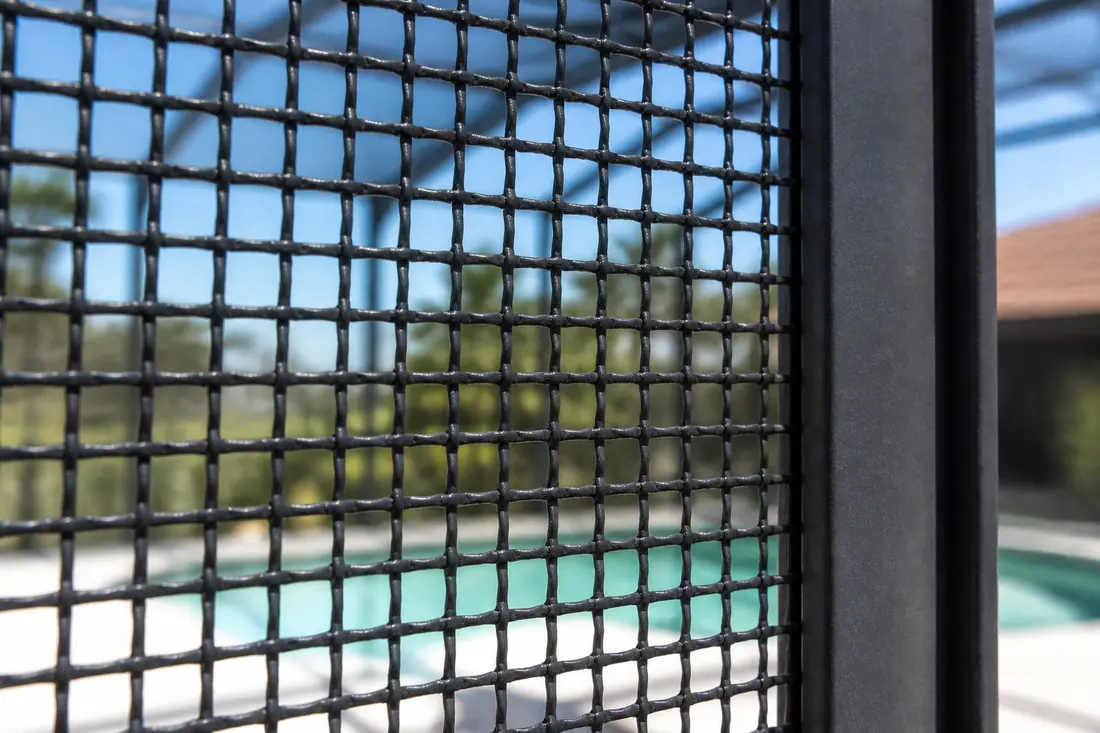
A heavier gauge that resists claws and the weight of an animal pushing against it. Usually applied to lower panels and around doors, which is where the damage happens — screening a whole cage in it costs more and buys nothing at roof level.
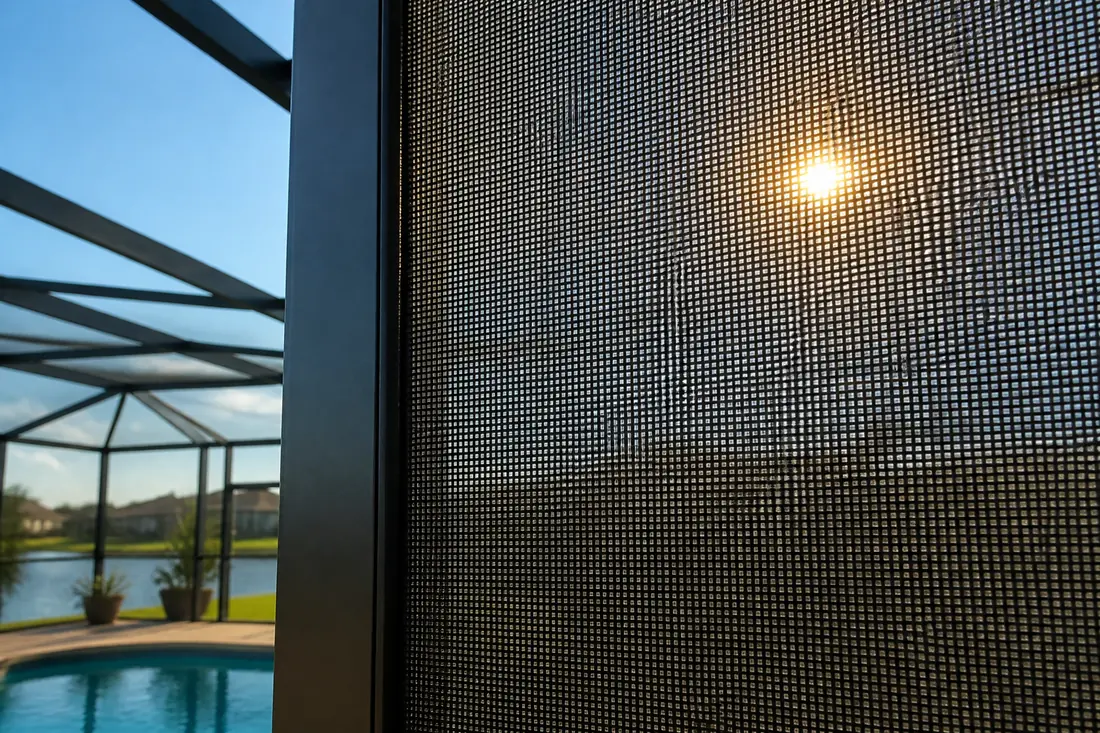
Denser mesh that cuts heat and glare on sun-facing elevations, and restricts sightlines as a side effect. It is what makes a west-facing cage usable in the afternoon. Those panels are noticeably darker to look through, so it is applied where the sun is rather than all round.
A screen enclosure is light, large and full of wind. What the Florida Building Code requires of the soil and footings under it, and why anchorage is where cages fail.
Read the guide →The Florida Building Code gives screen enclosures their own wind tables and a 300-pound load case. What that means for storms, quotes, mesh choice and older cages.
Read the guide →12 cities and the communities around them. Not sure if you are covered? Call and ask — we will tell you straight.
Old Naples · Aqualane Shores · Port Royal · Coquina Sands
34102, 34103, 34105
Pelican Bay · Vanderbilt Beach · Pelican Marsh · Naples Park
34108, 34109, 34110
Lely · Lely Resort · Bayshore · Kings Lake
34112, 34113
Tigertail · Marco Island Estates · Hideaway Beach · Isles of Capri
34145
Golden Gate City · Golden Gate Estates · Santa Barbara
34116, 34120
Vineyards · Island Walk · Logan Woods
34119
Naples Park · Vanderbilt Lagoon · Willoughby Acres
34108, 34109
Immokalee · Lake Trafford
34142
Ave Maria · Del Webb Naples · Maple Ridge
34142
Everglades City · Chokoloskee · Plantation Island
34139
Isles of Capri · Fiddlers Creek · Port of the Islands
34113, 34114
Bonita Shores · Little Hickory · Barefoot Beach
34134
It varies more than people expect, because two cages of the same size can need very different work. Replacing a few bays on a sound structure sits at one end; a full rescreen with fastener replacement and channel repair sits at the other, and roof panels cost more to reach than wall panels. What drives the number is how much of the screen is at end of life and what condition the frame and hardware are in, which is why an assessment comes before a price.
Press on a panel that has not torn. Screen at the end of its life gives way or tears at the spline under light pressure, and if the intact bays behave that way then replacing only the damaged ones means paying for mobilisation again within a year or two. If the untorn screen tests sound, repairing the damaged bays is straightforward and the right call.
Rescreening an existing enclosure is generally maintenance, while replacing or altering the structure is permitted work engineered to current wind load requirements. Which applies depends on what is being changed, and it is established as part of scoping rather than discovered partway through, because a permitting condition can change what gets built.
It is a tighter weave that excludes the biting midges standard screen lets straight through. Whether it is worth it depends entirely on the property: near mangrove, preserve or standing water it can be the difference between using an enclosure at dusk and not using it, while further inland standard mesh is usually fine. The cost is less airflow, slightly reduced visibility and more frequent cleaning, so it is often applied only to the elevations facing the problem.
The frame and the screen have very different lifespans, so the question splits in two. Screen is a wearing part and gets replaced several times over the life of a structure, with sun-facing roof panels going first. Aluminum framing lasts considerably longer, and what usually limits it is not the metal but the fasteners and anchors holding it together, which corrode in salt air. That is why hardware condition, rather than age, is the useful measure.
Scheduling tightens considerably once a system is being tracked, which is worth knowing in advance rather than at the time. An enclosure that is already open — missing panels, a door that will not latch, visible corrosion at the anchors — is the one worth attending to early, because those are the conditions that turn a rescreen into a structural repair.
Call (239) 429-0663 or request a callback — whichever is easier.